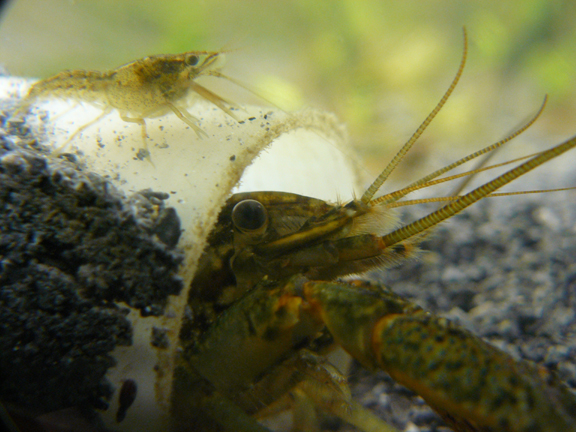
Marmorkrebs · Procambarus
Use In Aquaponics
There's a growing use of self-cloning marbled crayfish around the world in hydroponic gardening and aquaponics. In our experience, they're genuinely superior for the job.
Why they work so well
On their own, marbled crayfish produce a great volume of fertilizer even in a small aquarium. In larger setups, they don't just fertilize — they double as a steady feeder supply for edible fish like trout, bass, tilapia, oscar, pacu, and catfish.
What aquaponics actually is
Hydroponic gardening — growing plants in a small footprint by flushing roots directly with nutrients — already produces far better yields than soil in a fraction of the space, which is part of why it's grown so popular. Aquaponics takes that a step further: aquariums full of living animals supply a steady stream of natural fertilizer to the plants, which performs better than chemical feeding.
Marbled crayfish are dirty by nature — a typical aquarium needs two or more filters just to keep up with them — and that's exactly what makes them useful here. Their waste, plus the mucus shed during molting, is fertilizer every plant loves. A single 40-gallon tank can support multiple aquaponic systems running at once, feeding healthy plants continuously while the crayfish supply never runs out on its own.
You can also just siphon crayfish tank water straight onto soil-based plants, indoors or out, with real success — though true aquaponics is a fully contained, soil-free system that runs year-round, which is a different setup than simply watering potted plants with dirty tank water.
How a basic system works
Dirty water is pulled from the aquarium by a pump (or a canister filter with no filter media inside) and released into a tray filled with lava rock or a similar medium. Potted plants, also seated in that same medium, sit in the tray. As water washes through, the medium traps the natural fertilizer, which the plants absorb without drowning their roots. A sump pump then draws the water out the other end of the tray and returns it to the aquarium — filtering the tank and feeding the plants in a single loop. Larger systems can grow real food fish like bass and trout alongside sizeable harvests of vegetables, and the whole approach scales from an apartment windowsill to a full greenhouse. Indoor setups typically add high-output grow lighting, like high-pressure sodium lamps.
Everything on this page reflects personal, hands-on experience — not the results of formal academic research.