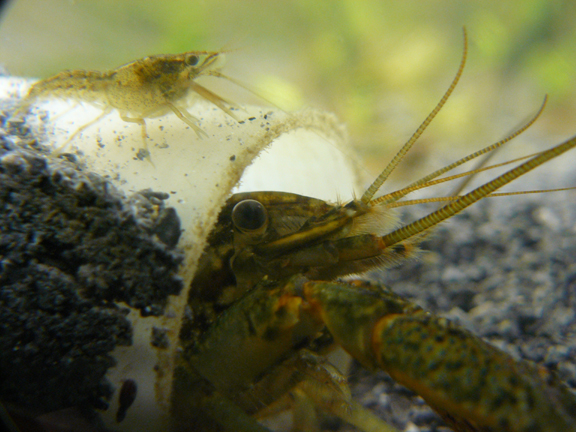
Marmorkrebs · Procambarus
Substrate
Updated thinking on this one, for anyone revisiting after reading an older version of this page. For a large ongoing colony, an undergravel filter is important, on top of a normal filter — and the substrate you pair it with matters more than it might seem.
Why we stopped recommending sand
We used to recommend a sandy layer with larger gravel on top. After several months of use, though, we found that a sandy layer combined with an undergravel filter packs down so densely — whether it's sand or crushed onyx — that it eventually stops water from flowing into the filter at all. With fine sand, not even a powerhead can pull water through once it's packed that tight, which can take a few months to happen.
What we recommend instead
A layer of small natural gravel, covered with a layer of larger garden stones. The larger rocks sitting on top double as hiding places for newborns.
Skip colored "aquarium gravel" from pet stores — it's painted rock, and crays will eat the paint off it, which isn't good for them or for the gravel. Use natural stones instead, roughly quarter-to-golf-ball size, the kind sold in bags in the garden section of any hardware store. The bigger stones give babies real places to burrow into, and to escape from once they outgrow them.
Without an undergravel filter, no outside filter can really keep up — these animals are messy. That's exactly why they work so well in aquaponics gardening systems.
Lava rock
We've experimented with white marble rock, river stones, and lava rock, all easy to find at garden centers. Lava rock comes out ahead. The other rock types carry a lot of fine powder that has to be rinsed out before use, or it never fully goes away. Lava rock is light enough that crays love digging under it, babies hide well in and under it, and water flows freely around it in an undergravel setup. In one tank where fine sand had packed completely solid, replacing it with a mound of lava rock in just one spot restored flow to the whole filter. It also carries nutrients that benefit plants, which is part of why it's popular in hydroponic growing. At this point we recommend lava rock over every other substrate we've tried.
If your filter is already packed
If you're still on the fine-sand substrate we used to recommend and your powerhead has stopped moving water, there's a fix. Move the crays to a temporary spot for a couple of hours — even an ice chest with an airstone works. Then dig into the impacted substrate, which will feel packed hard, and loosen it with a fork and your fingers until it's porous again, running both filters while you work. Let the tank settle for an hour or more afterward, then siphon off the loose layer of debris that collects on the bottom — the water clears quickly. That dirty tank water is genuinely good for outdoor or indoor plants, so it's not wasted. The powerhead should start moving water again once it works through the loosened substrate.
Everything on this page reflects personal, hands-on experience — not the results of formal academic research.