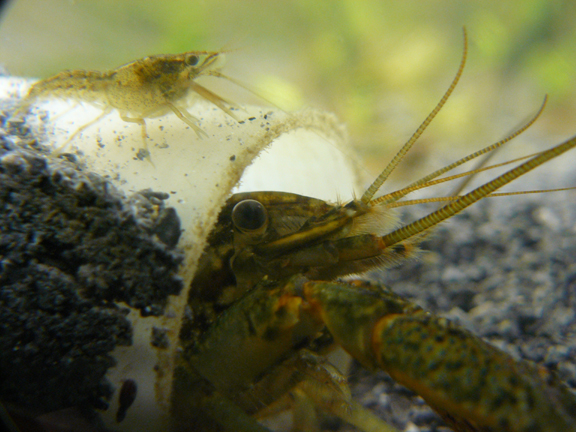
Marmorkrebs · Procambarus
Filtration
Crays can be dirty, especially as a colony grows. Filter these tanks with double the appropriately-sized filter — bigger is always better here.
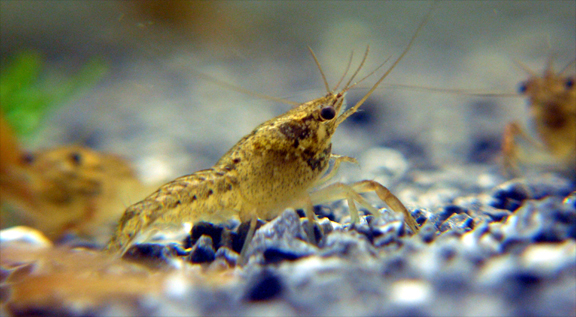
The ideal setup
An undergravel filter plus a canister filter, run together. The undergravel filter matters more than most pet store employees will admit — yes, there's maintenance involved, but crays aren't fish, and a fish-oriented filtration setup doesn't serve them the same way. With an undergravel filter, you can mix fine-gravel-sized charcoal into the substrate, getting the same benefit charcoal provides in a canister filter. For the canister filter itself, size it for double your actual tank volume. We sometimes run Hydroton through a canister filter for a month, which leaves it as excellent growing medium afterward for an aquaponic garden.
Signs of trouble
If crays are finding ways to climb out of the tank, that's a clear sign of too little oxygen and not enough water movement. Rule of thumb: keep the water level 2 inches below the rim, and run 3× or more the filtration you'd use for a normal community tank.
Protecting the intake
Cover the filter intake with a filter sock (sometimes called a bonded foam sleeve) — filter media bags from the pet store work well for tube intakes. This keeps newborns from getting pulled into the filter, and since it collects waste and food along the way, it doubles as a feeding station for crays of every size.
Water changes
Plan on a partial water change once a week in a colony tank. Even with strong filtration, molting and normal waste will turn clear water yellow within a week or so in a large colony that doesn't have an undergravel filter and proper substrate. Changing up to 90% of the water weekly is normal if you want a clear tank and don't have an undergravel filter running; otherwise, half the water every two weeks is enough to keep ammonia and nitrates from building up.
Starting a colony
Start a breeder tank with several specimens — babies or young adults are a better starting point than larger adults of uncertain age. Once they start having babies, it's really just a matter of time before you have several generations keeping the supply going on its own.
Everything on this page reflects personal, hands-on experience — not the results of formal academic research.