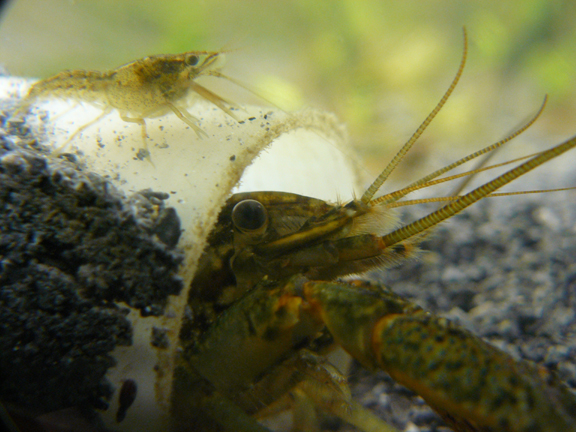
Marmorkrebs · Procambarus
Ponds & Lakes
Outdoor ponds and lakes aren't a good idea for this animal. It's a new species, and not something we want introduced into native environments — ponds and lakes alike connect to the wider natural water system in ways that are easy to underestimate.
Why ponds and lakes are a risk
A backyard pond can overflow during a heavy rain, and that overflow doesn't stay contained — it moves. Natural rainfall creates and feeds streams and tributaries that connect to nearby lakes, rivers, and waterways, and any animal in an overflowing pond can end up carried along with it. A lake presents the same risk in a more direct form: it's already part of that connected system, feeding and fed by streams and tributaries that lead well beyond the property line. Outdoor ponds also attract birds, which can carry crays off and drop them elsewhere in the wild, entirely independent of any flooding.
These animals should stay controlled in indoor aquariums, not outdoor ponds or lake-adjacent setups.
What we've found on temperature tolerance
In North Texas, we've run tanks through 140-degree heat in a garage and through overnight freezes in winter, and marbled crayfish survived conditions that would kill fish outright. That said, we suspect they couldn't survive a genuinely long freeze, the kind you'd see in a northern state. These are aquarium animals first and foremost, not something built for a natural pond or lake environment long-term.
A note for aquaponics
If you're using outdoor tubs for aquaponics — Tupperware, Rubbermaid, Sterilite, that kind of container — those work well, especially darker-colored ones that block sunlight. Nesting one tub inside another helps keep algae down and keeps the water cooler in summer sun. That's a controlled, contained setup, which is a different situation entirely from an open pond or lake connected to the wider water system.
Everything on this page reflects personal, hands-on experience — not the results of formal academic research.