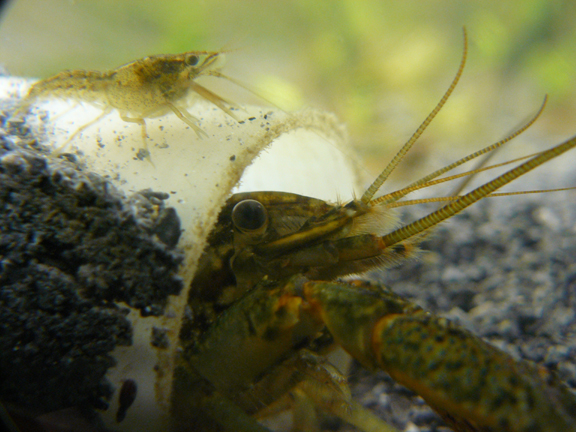
Marmorkrebs · Procambarus
Tank Size
The basics for setting up a tank to maintain a decent-sized colony of marbled crayfish — useful whether you're keeping them as pets or raising a supply for feeders and fishing bait.
One thing first: you cannot raise marbled crayfish in the same tank as cichlids, turtles, or other animals that will eat them. They need a dedicated tank of their own.
How big a tank do you need?
This is the most common question we get from novices. A 10-gallon tank is fine for the first couple of months, but it gets smaller fast as the colony reproduces — and like any crowded environment, too many animals in too little space turns a peaceful tank into a competitive, even hostile one. The rule of thumb: the bigger the colony, the bigger the tank. Start with at least 40 gallons and go bigger if you can.
Keep the water level 2 inches or more below the rim — crays are determined escape artists, and that gap makes a real difference. Since they'll devour any live plants, we like adding natural-looking fake plants for them to climb and claim as territory; it seems to cut down on the "king of the hill" squabbling that comes with overcrowding. No matter the tank size, it will get crowded eventually.
Cray apartments
To fit more crays into one tank peacefully, they need private space of their own. On top of the substrate, stack sections of 1¼-inch PVC pipe, cut into uniform 5-inch pieces, covering part of the tank bottom and stacked like a honeycomb. It's a neat effect — each crayfish tends to claim one tube as its own, so you end up with something that genuinely looks like a beehive through the glass, one cray per apartment.
Leave several inches between the water's surface and the highest PVC piece, same escape-prevention logic as above. And don't cover the entire tank bottom with pipe — leave some clear, or you'll block the undergravel filter from working properly.
Everything on this page reflects personal, hands-on experience — not the results of formal academic research.